
Klahowya tillicum!
That’s “Greetings, people” in Chinook wawa, the inter-tribal trade lingo developed over time by the original inhabitants here. These Columbia Basin peoples’ oral accounts and archeologists agree that Indigenous people lived in our area for up to 10,000 years before Europeans showed up.
When Lewis and Clark’s expedition passed through in 1805-1806, those explorers estimated that nearly 5,000 year-round Native residents — and up to 11,000 during fish runs — populated the lands along the Columbia from the Sandy River to Sauvie Island. In other words, those explorers didn’t travel through some empty, unknown country but were traversing lands long successfully inhabited by thriving Indigenous cultures that had built a vast trade network along the river.
Over 30 villages existed not far from Beaumont-Wilshire. Neerchokikoo, for example, was a flourishing fishing village of the Multnomah band of Chinookan peoples located on the site of today’s Native American Youth and Family Center (NAYA) at NE 51st and Columbia Boulevard. Other accounts detail settlements near the Portland Airport and The Grotto, and what’s now Sandy Boulevard was a well-traveled Native footpath between fishing grounds on the Columbia and the Willamette rivers.
Largely peaceful, many of these Indigenous groups lived in sturdy riverside cedar-plank longhouses that could accommodate up to 100 people. Expert canoe builders (some of their waxed and painted watercraft could carry 30 paddlers), these Natives were admired as skillful hunters and fishers, helpful guides, accomplished artists and woodworkers, and masterful weavers of waterproof baskets, hats, and clothes.
Change would eventually come, however. When the U.S. and Britain divvied up the Pacific Northwest, millions of acres of Oregon Territory — including all of Portland — were opened to White settlement. By the mid-1850s, the Indigenous population had been decimated by diseases brought by the newcomers (notably smallpox) and forced relocations to reservations.
Despite their decline in population, Native Americans are still an important component of our community today. According to the online Oregon Encyclopedia, over 40,000 Urban Indians live in the Portland area.
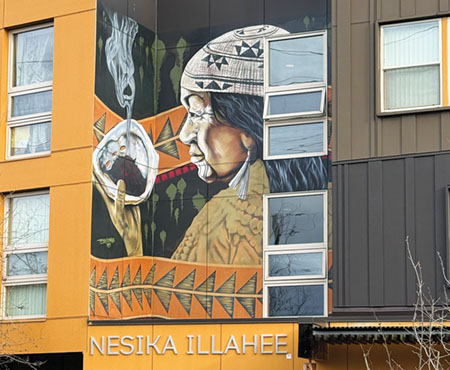
Beaumont-Wilshire is a beneficiary of that presence. For example, Javelina Indigenous Dining on NE 42nd offers Native American chef Alexa Numkena-Anderson’s traditionally inspired cuisine. And just north of us in Cully, apartments co-sponsored by NAYA — including Nesika Illahee (“Our Place”) and Mamook Tokatee (“Make Beautiful”) — showcase Native-inspired architecture and art. NAYA itself is one of the largest employers of urban Native American people in the Pacific Northwest, and nearby Bison Coffeehouse is our city’s only Native-owned coffeeshop and bakery.
We honor our original inhabitants with streets and places named after area tribes — Klickitat, Tillamook, Clackamas, Multnomah — and words from Indigenous peoples’ languages, like Willamette (“still water”).
A short bike ride away is one of the newest Portland Parks, Khunamokwst (KHAN-ah-mockst). In Chinook wawa, that means “together,” which carries the spirit of the First Peoples here that can inspire us today.
BWNA Board member Tim Gillespie was a public school teacher in the Portland area for almost four decades. A poet and essayist, he has lived with his family in Beaumont-Wilshire since 1979.