
Looking to save money — and the planet? Here’s a relatively easy undertaking that helps meet both of those goals.
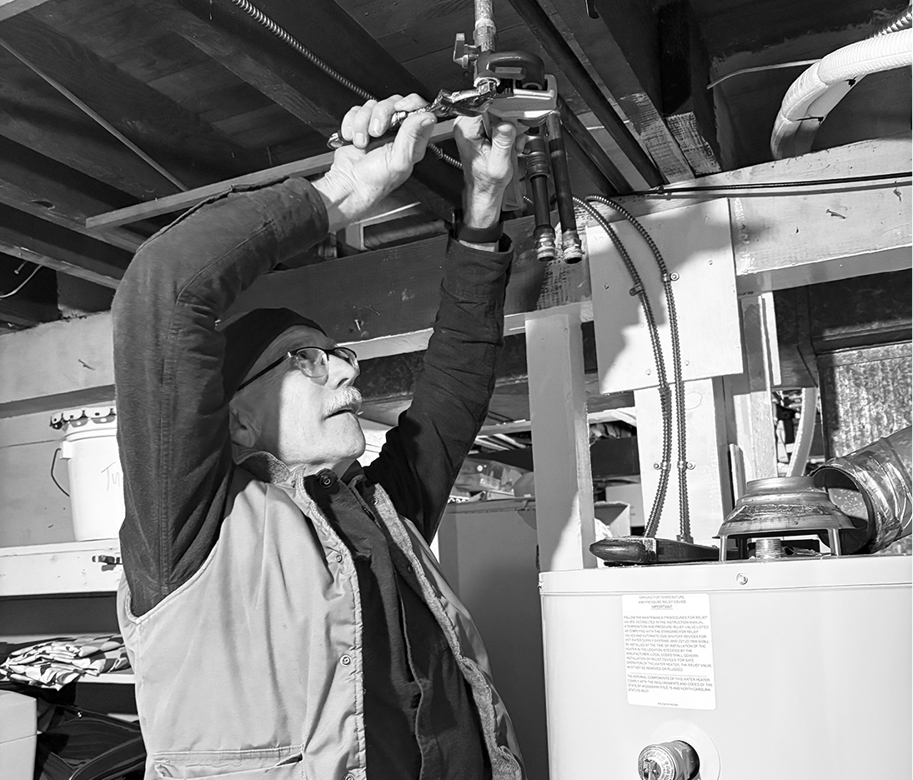
Upgrading from a traditional gas water heater (62% efficient) to an electric heat pump water heater (350% efficient) can significantly improve energy efficiency while reducing household utility costs. Recently, my stepdaughter and I, with B-W homeowner and friend Patti Koehler’s assistance, completed such a conversion at Patti’s home in less than four hours. We handled much of the work as a DIY project.
Hyper-Locally Sourced Supplies
Preparation began with gathering the required materials. All plumbing fittings, valves, and miscellaneous hardware were sourced locally, with most plumbing components purchased from Beaumont Hardware. Having the correct fittings and adapters on hand helped ensure the project moved quickly without unnecessary trips for additional parts.
Work began by shutting off the gas supply, disconnecting and capping gas lines, and draining and removing the existing gas water heater from the basement. Once the space was cleared, attention shifted to preparing the area for the new heat pump water heater.
Hire an Expert When Necessary
Unlike a gas heater, a heat pump water heater runs entirely on electricity. For this installation, an electrician was brought in to install a dedicated 30-amp circuit to the heater’s location. This is a critical step because most heat pump water heaters require a dedicated electrical supply to operate safely and efficiently. The electrician completed the circuit drop quickly, ensuring the new unit would meet electrical code requirements.
Plumbing was “Easy”
With the power available, the plumbing connections were straightforward. The cold water supply and hot water outlet were connected to the new tank using standard plumbing fittings, along with a shutoff valve and flexible connectors to simplify future maintenance. The condensate drain from the heat pump unit was routed to an existing condensate pump next to the furnace.
Once plumbing and electrical connections were completed, the tank was filled with water and the system powered on. After a brief startup cycle, the heat pump water heater began operating normally. Compared to the previous gas unit, the new system runs very efficiently and uses ambient air from the basement to heat the water.
DIY for Some, Not All
Although this type of conversion can absolutely be tackled as a DIY project by homeowners comfortable with basic plumbing, hiring a professional plumber is also a good option. The plumbing work is fairly straightforward, but proper installation ensures safety and reliability. In many cases, the only specialized trade required is an electrician to install the dedicated circuit.
Overall, the conversion was smooth, fast, and practical. With locally sourced parts, basic plumbing tools, and a small amount of professional electrical work, switching from gas to a heat pump water heater can be completed in a single afternoon while improving both efficiency and home comfort. With incentives from Energy Trust of Oregon, the average payback for dollars invested is three to four years.
Geoff has spent the last 20 years in the energy efficiency field, specifically water heating. He was instrumental in helping the Department of Energy develop new performance standards for water heating that go into effect in 2029. He’s passionate about helping the market embrace and adopt energy efficiency without any sacrifice of performance and/or comfort. Geoff and wife Laurie Webber have been B-W homeowners since 2012, living here full-time since 2018. Questions about home energy efficiency? Email geoff.wickes@gmail.com.